Why Kitesurfing in the Caribbean Feels So Different
The first thing you notice when you kite in the Caribbean is not the wind.
The first thing you notice when you kite in the Caribbean is not the wind.
The first thing you notice when you kite in the Caribbean is not the wind.
It’s how consistent it is.
You rig, get on the water, and the session builds in a predictable way. Wind strength tends to sit in a stable range, the direction stays clean, and you don’t spend much time correcting your setup once you’re out.
That comes down to the trade winds.
Across most of the region, they blow side-onshore to side-shore, typically between 15 and 25 knots. Not too gusty, not too variable, and with relatively low turbulence compared to many coastal spots. That makes it easier to hold power through your lines and ride without constant adjustments.
But wind alone doesn’t explain it.
What really defines the Caribbean is how the spots are structured.
You’re not riding one coastline. You’re moving through a mix of reefs, lagoons and channels, and each of those changes the water state quite clearly.
Around Antigua, for example, areas like Jolly Harbour or Great Bird Island give you clean wind with relatively open water. Move towards Green Island or Coco Point, and you start getting more protection from surrounding land and reef formations, which can flatten sections of water and reduce chop.
Then in Barbuda, Codrington Lagoon is a completely different setup. Shallow water, minimal swell, and strong protection from the outer reef. It’s the kind of spot where you get consistent flat water with very little interference, which is ideal for controlled riding, progression or just longer sessions without fatigue.
Further south in The Grenadines, the setup changes again.
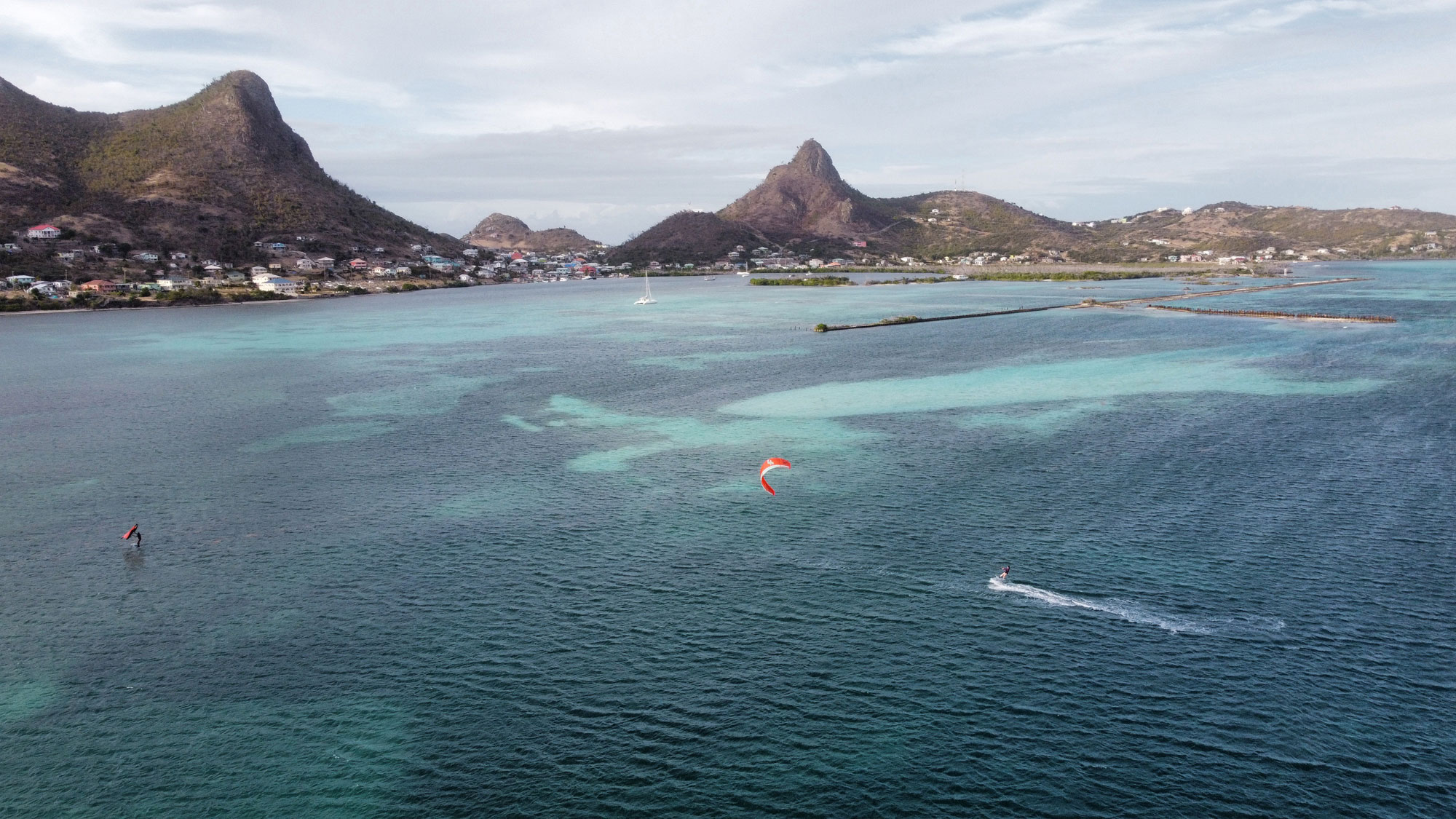
Around Union Island and the Tobago Cays, you get long stretches of uninterrupted wind with reef systems creating defined zones, flatter water inside, more texture outside. Spots like Petit St. Vincent or Palm Island tend to be less sheltered, which means slightly more movement on the water surface, while Canouan often offers a combination of both within short distances.
That variation is key.
You’re not adjusting only to wind strength, but also to how the water behaves in each location, flat, choppy, shallow, or slightly rolling. And that directly affects how you ride: edge control, speed, pop, and overall fatigue.
Another factor is space.
Compared to many well-known kite destinations, rider density is generally lower. That gives you cleaner lines, fewer interruptions, and more freedom in how you move across the spot. You’re not constantly adjusting your trajectory to avoid others or working around a restricted launch area.
From a practical standpoint, this also means you can focus more on your riding rather than managing the environment.
And then there’s the structure of the trip itself.
If you’re moving between spots, especially by boat, you’re not locked into one setup. You can choose locations based on wind direction, strength, and water conditions. That makes it easier to stay within your ideal range instead of adapting to whatever is available.
Over a few days, this adds up.
Instead of repeating the same conditions, you end up riding a range of setups: flat water sessions, slightly more powered runs, longer lines in open areas, shorter technical sessions in protected zones.
That kind of variation is difficult to replicate if you stay in a single location.
Kitesurfing in the Caribbean didn’t evolve around high-performance competition spots. It developed around consistency, accessibility, and the ability to move between different types of conditions within a relatively small area.
And that still defines it today.
You don’t need extreme wind or highly technical setups to get the most out of it. You just need a solid, adaptable quiver and an understanding of how each spot works.
If you’re moving through areas like Antigua, Barbuda or The Grenadines,from flatter zones around Coco Point or Codrington Lagoon to more exposed sections near Canouan or the Tobago Cays, you start to see how small changes in geography affect your riding.
That’s really what sets it apart.
Not just the wind, but how consistently you can ride different types of water in the same trip.
On our kite weeks, that’s exactly how the routes are built, moving between spots based on conditions, so you can stay within a good range and make the most of each session.
You can explore how it works and what the setups typically look like here.
Tell us about your dream trip and we'll build a personalised proposal within 48 hours.
We're ready to help you plan the perfect kiteboarding or wing-foiling adventure. Whether you're a complete beginner or an advanced rider, our team will craft an experience tailored to your goals, schedule and budget.