Choosing the Right Kite Sizes for Greece vs Caribbean
One of the most common questions before any kite trip is simple: what kite sizes should I bring?
One of the most common questions before any kite trip is simple: what kite sizes should I bring?
One of the most common questions before any kite trip is simple: what kite sizes should I bring?
And the answer is always the same: it depends. But not in a complicated way.
If you’re heading to places like Greece or the Caribbean, you’re dealing with relatively reliable wind systems. That’s a good thing. It means you don’t need an extreme range of gear, but you do need to choose it properly.
In Greece, especially during the summer months, the wind is driven by the Meltemi. It’s known for being consistent, but also for building throughout the day. Mornings can be lighter, afternoons stronger, and some days can push into higher wind ranges.
Because of that, slightly smaller kites tend to be more useful.
For an average rider, something like a 7m to 10m range works well most of the time, with a 12m as backup for lighter days. If you’re lighter, you might lean more towards smaller sizes. If you’re heavier, you’ll shift that range slightly up.
The key thing in Greece is being prepared for stronger afternoons, especially in more exposed spots.
And that really shows depending on where you ride. In places like Paros, around Pounda or Antiparos, the wind can accelerate through the channels and pick up quite a bit in the afternoon. The same happens when you move across the Cyclades, spots around Koufonisia or more open bays can feel noticeably stronger even when the forecast looks similar.
The Caribbean is a bit different.
Wind there is usually driven by trade winds, which are steadier and more consistent throughout the day. Instead of building sharply, they tend to hold a more even strength, which makes sessions feel more predictable.
Because of that, mid-size kites become the most used.
For many riders, a 9m and a 12m will cover almost everything. A 7m can still be useful on stronger days, but overall, the range feels slightly more balanced than in Greece.
If you’ve ridden around Antigua and Barbuda, you can feel this straight away. Spots like Jolly Harbour or the areas around Great Bird Island tend to deliver steady wind without big surprises during the day. In places like Codrington Lagoon in Barbuda, where the water is shallow and protected, you often ride comfortably powered rather than overpowered.
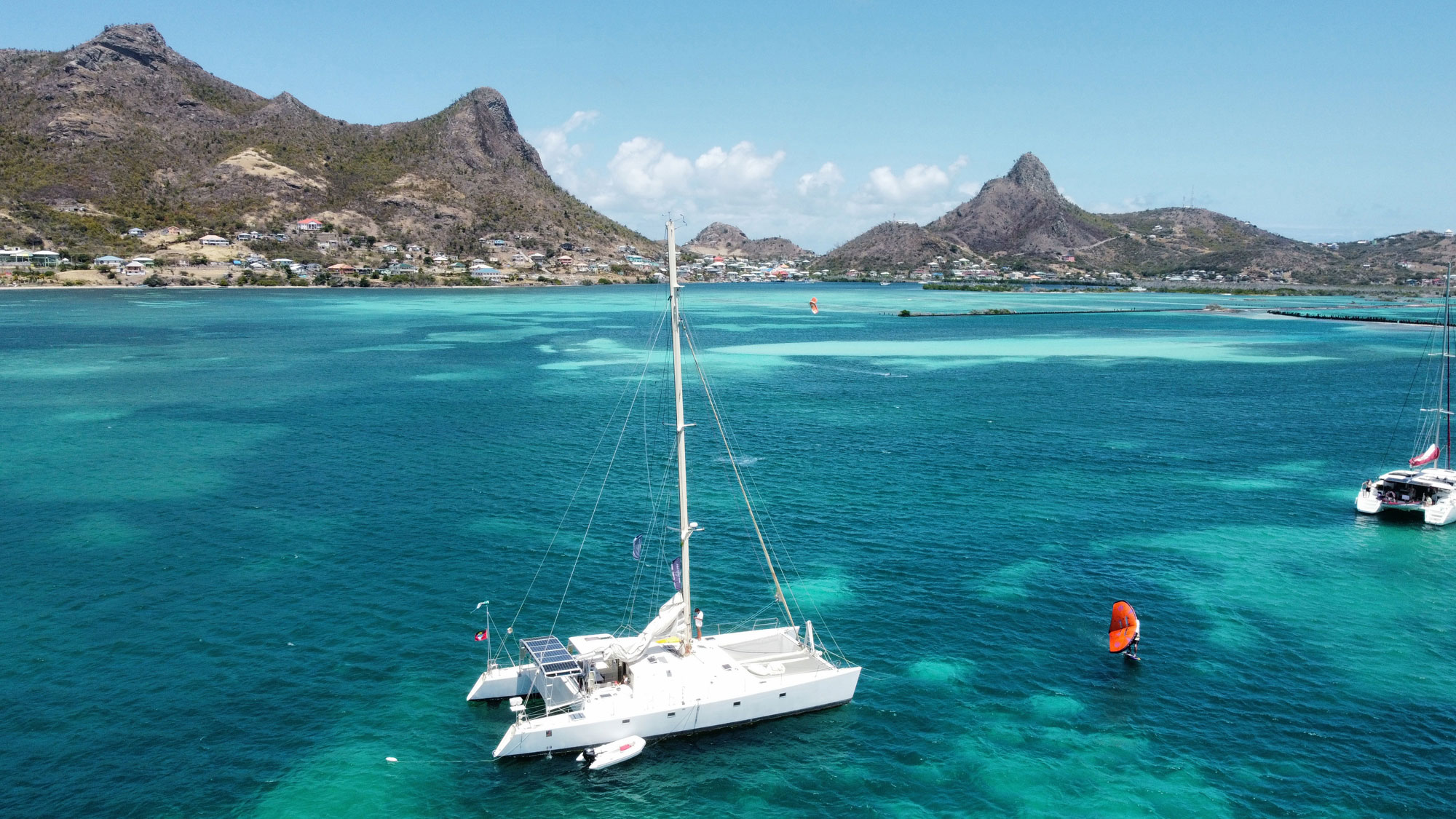
The same goes further south in The Grenadines. Around islands like Union Island or the Tobago Cays, the trade winds are clean and consistent, and the water can range from flat lagoons to slightly more open conditions depending on where you are. It’s the kind of setup where you end up using your mid-size kite most days and only switch if conditions really change.
Another factor is the type of spots.
In both Greece and the Caribbean, you’ll find a mix of flat water, open sea and protected areas. But the feeling can still vary. Some spots feel more powered, others softer, even with similar wind speeds.
That’s why having a small overlap in your quiver is actually useful. It gives you flexibility depending on the spot, not just the forecast.
One mistake people often make is trying to cover every possible scenario.
You don’t need to. You just need a range that works for most days.
Two kites, sometimes three, chosen well, will always perform better than a full quiver that you barely use.
And it’s also worth thinking about how you like to ride.
If you prefer being powered and pushing your sessions, you might lean towards smaller sizes. If you like cruising comfortably, you’ll go slightly bigger.
There’s no perfect setup, but there is a smart one.
For most trips, especially if you’re moving between spots, simplicity wins.
A clean, well-spaced quiver, gear you trust, and a bit of flexibility.
That’s usually all you need.
If you’re planning to ride across different areas, from Paros, Antiparos or Koufonisia in Greece to Antigua, Barbuda or The Grenadines in the Caribbean, having a setup that adapts easily to changing conditions makes a real difference.
On our trips, most riders travel light but cover a solid wind range, which ends up being the most practical approach once you’re actually there.
You can explore our kite weeks and see how conditions and spots change throughout the journey.
Tell us about your dream trip and we'll build a personalised proposal within 48 hours.
We're ready to help you plan the perfect kiteboarding or wing-foiling adventure. Whether you're a complete beginner or an advanced rider, our team will craft an experience tailored to your goals, schedule and budget.